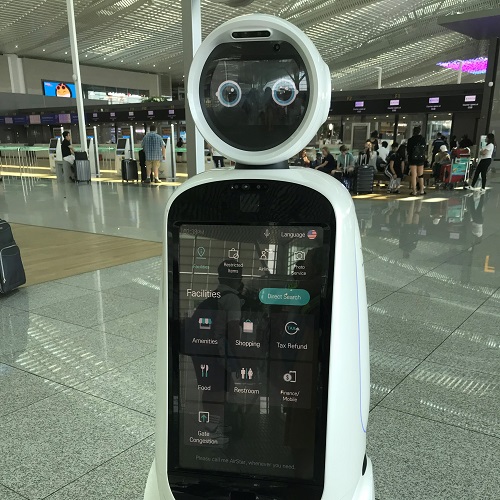
Initial Impressions of South Korea
Evan and I had the unique opportunity to travel to South Korea for three months in the Fall of 2021, between the months of September and December. We had an amazing time and wanted to share some of the unique aspects of the Korean society and culture with you. Overall, the country is modern and clean, while still honoring their historical heritage. The Korean people are very polite, friendly and hospitable with strong work ethics. They desire to live in harmony with their neighbors, both at work and at home. We found they also keep in good physical shape, as exemplified by the many parks and recreation activities within the country. The food is dominated by spicy seafood stews and barbecue, which is a fair warning to folks that are either vegetarians or have sensitive taste buds, but Korean Banchan (side dishes) are delicious so everyone can enjoy.
Korea is modern
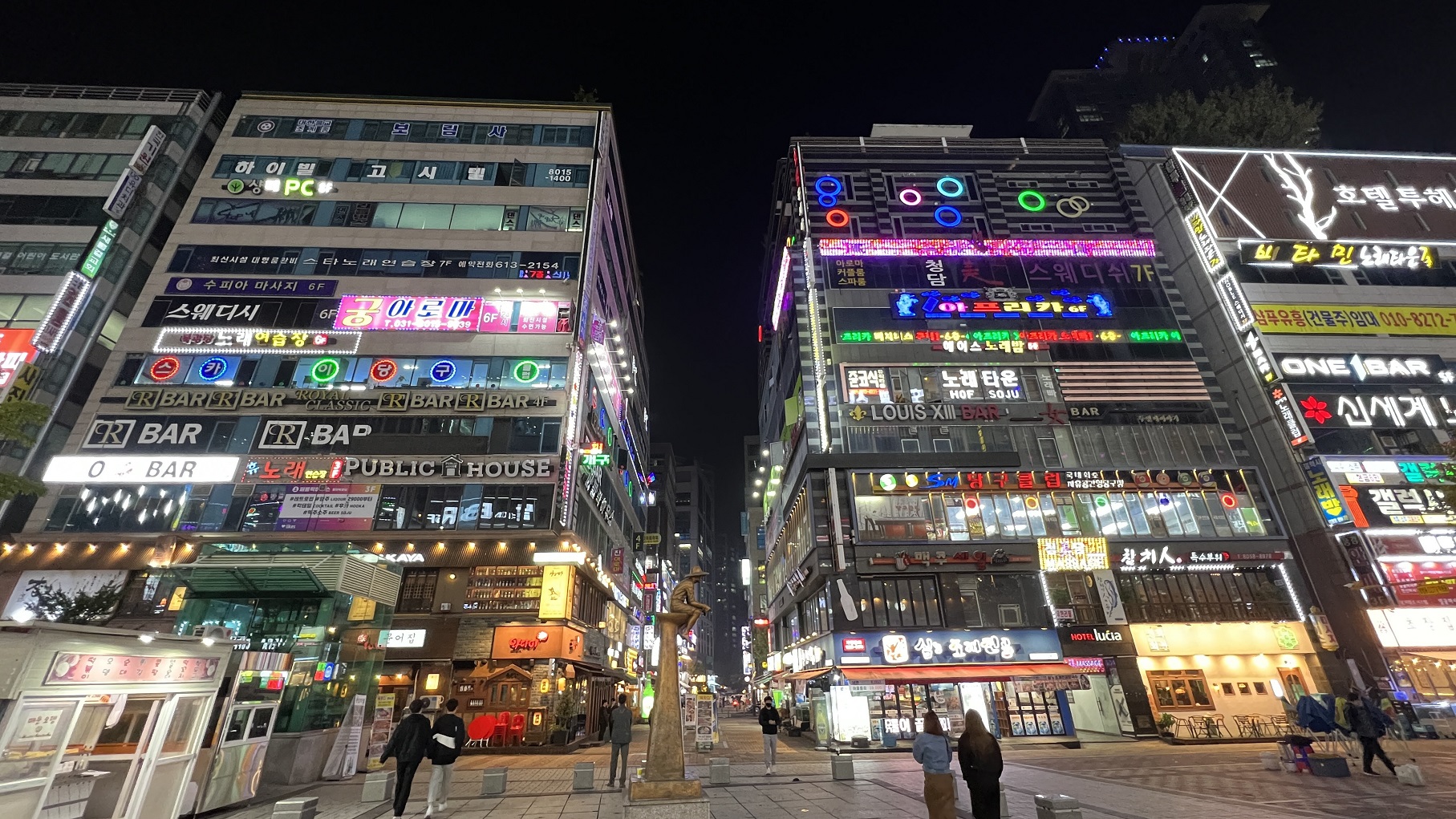
As a country, Korea has modernized rapidly over the last 50 years. As a home to industry giants such as LG, Hyundai and Samsung, the country is proud of their newfound technology supremacy. To maximize efficiency and since horizontal cityspace is at a premium, businesses and shops are often stacked one on top of the other in high-rise buildings. The buildings advertise by placing a sign outside their window, creating interesting pictures of neon lit buildings in Dongtan, a township in the city of Hwaseong, Gyeonggi-do.
Korea has high standards of cleaning and hygiene
We were amazed by how well the public facilities and streets are maintained in Korea. It was very rare for us to see any trash or debris on the side of the road. Even the leaves that fell during our stay were quickly swept away by local workers.
.JPEG)
We were very impressed by the uniform public health standards in Korea. At the time of this trip, Korea was in the midst of one of several ‘waves’ of the Covid-19 Pandemic. We rarely saw anyone without their masks on, indoors or outdoors. The public seems to have a better conception of “public health” in Korea compared to the United States, that we’re all in this together in the fight against the virus. People are still going to work, and going out to the cafeteria and restaurants for lunch as usual. Korea has been using testing and contact tracing to keep the Covid cases down. Some of the restaurants had fewer tables, and some had plexiglass barriers between the tables, but otherwise it seemed like very normal environment. The buses were certainly as packed as ever!

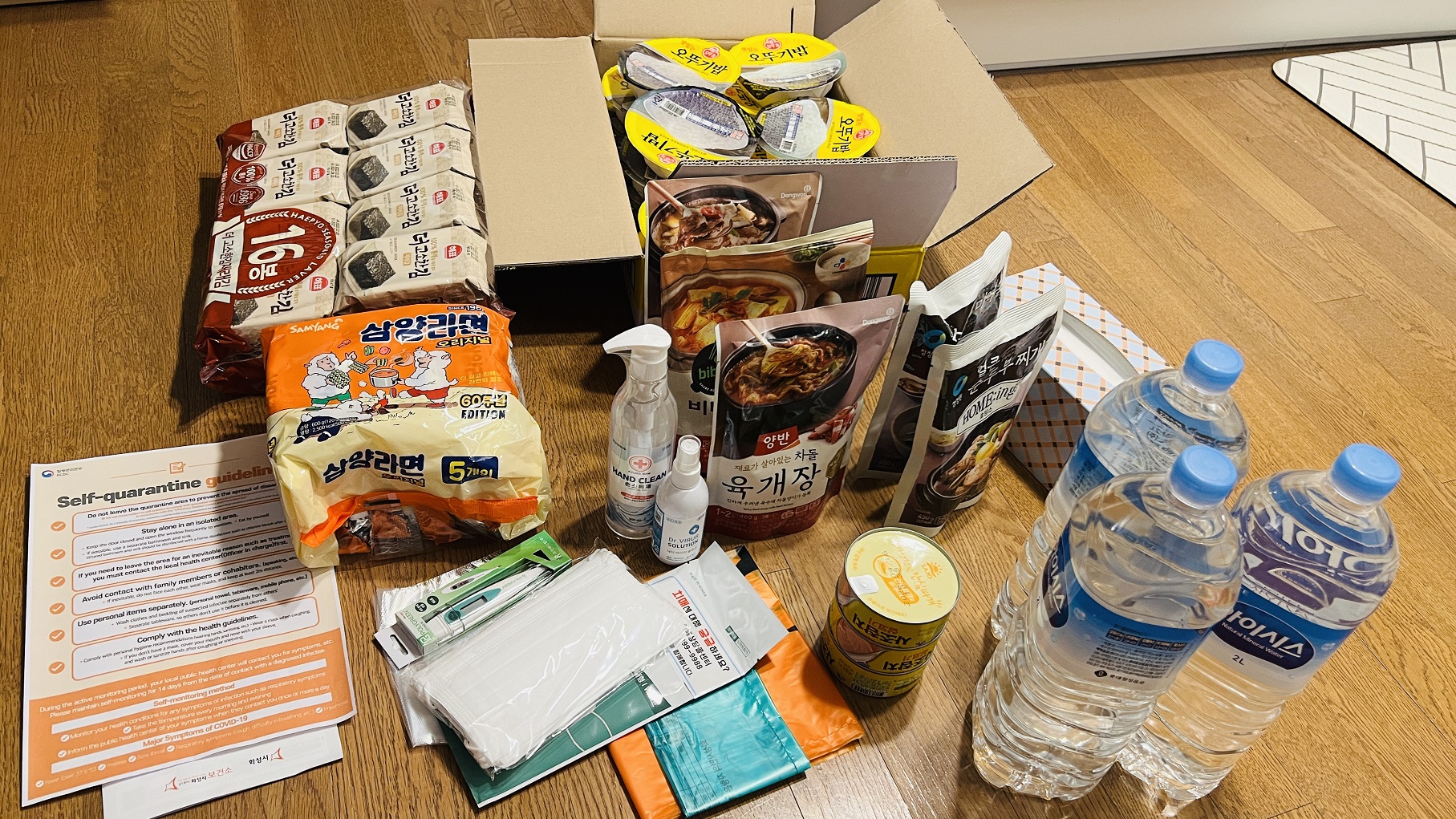
Some of the public health measures were quite strict, if not somewhat intrusive, which was very unfamiliar for us as American citizens. Evan was able to get a quarantine exemption from his work, which was valid only if he tested negative at the local health facility upon arrival. Both of us were forced to install a monitoring app on our iPhones which linked our phone number to the local government quarantine officer. For my self-quarantine, the officer called us to retrieve the address of our apartment, so that they could send some food (mainly cooked rice, some snacks and spicy stews). I had to physically move my phone every couple of hours; otherwise, the app would notify the quarantine officer that I might have skipped quarantine to wander around town.
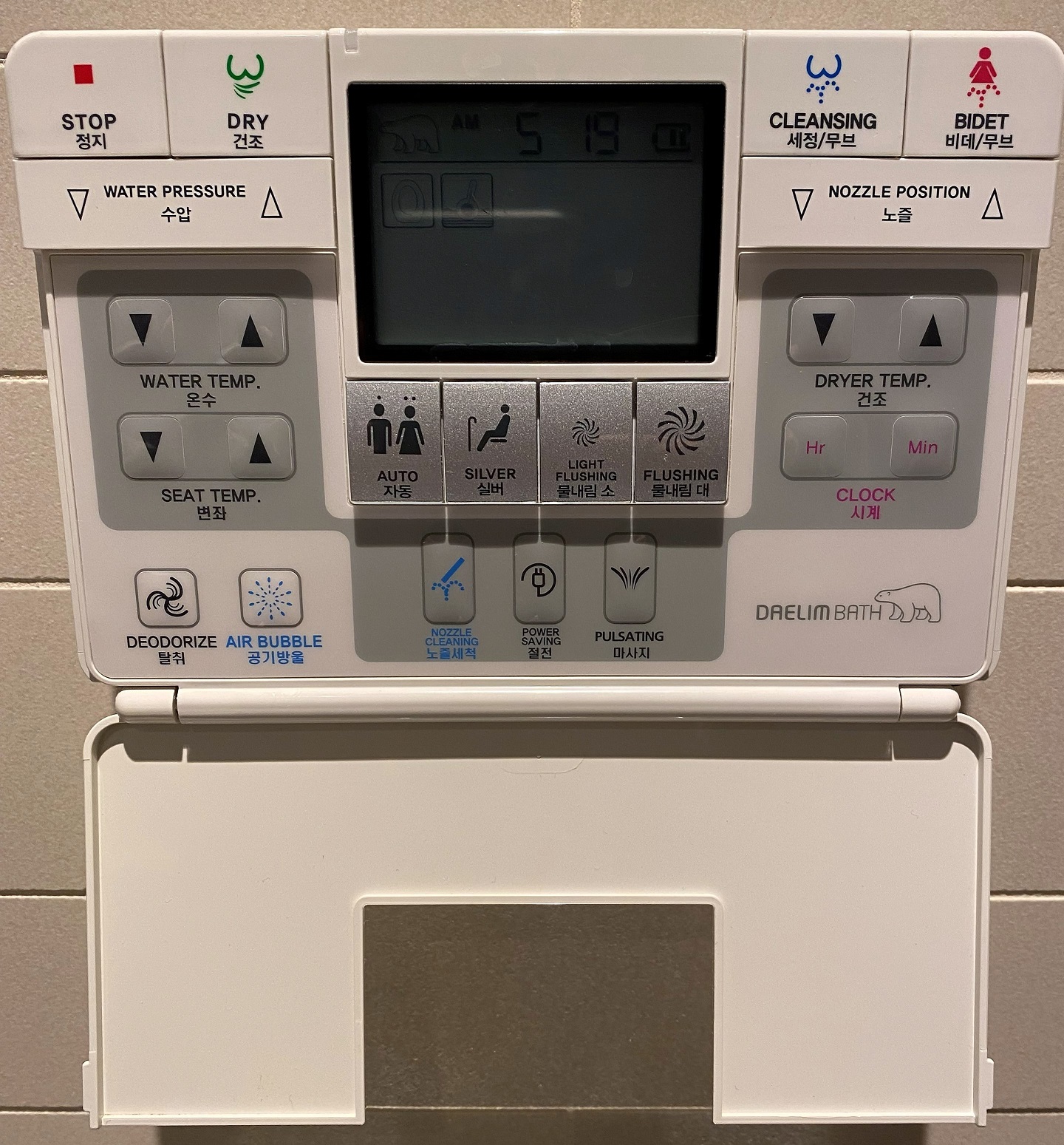
It’s quite common to find advanced bidets attached to the toilets in public restrooms, especially in the malls. All of the toilets are Western-style and come with all the possible bells and whistles you could possibly think of. The bidet seats are heated and have an adjustable spout. It washes, cleans, dries and some even deodorize your bum for you! Our trip solidified our opinion that the bidet is a more sanitary and hygienic way to “do business” and is good for the environment.
Public transportation in Korea is fast & efficient
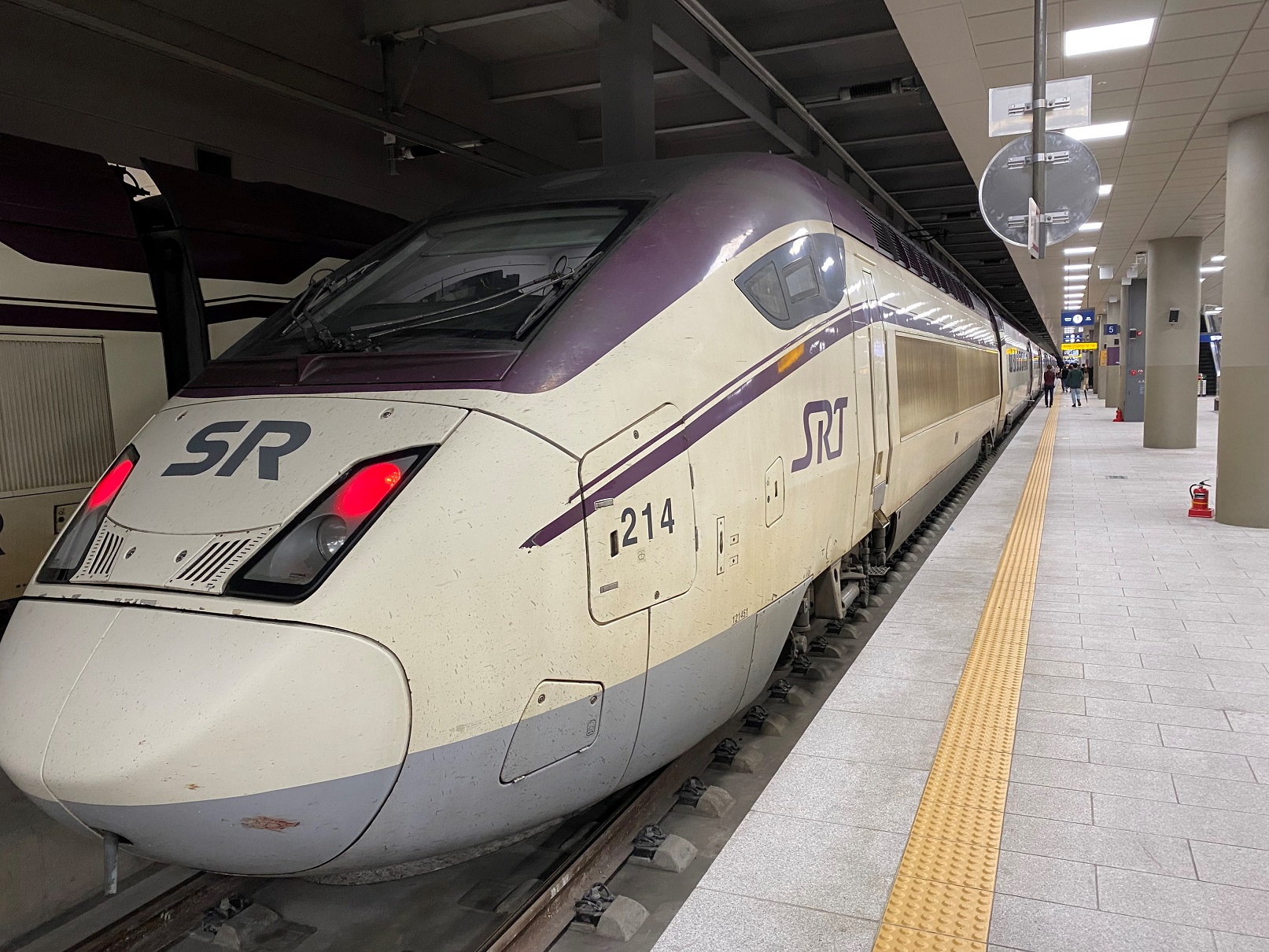
Even though the country is quite small (about the size of the state of Indiana in the US), there are many modes of transportation to get around within the country. Our favorite mode of transportation is the ‘SRT’ (Super Rapid Train) system. This train began service in December 2016 . With speeds clocking up to 300 km/ hour (190 mph), this train remains one of the fastest train system in the world. SRT trains travel across the entire country via two routes: from Seoul to Busan, and from Seoul through the southwestern side of the country to the city of Mokpo. We were able to take the SRT to travel to Busan, the second largest city in Korea, for a weekend getaway, and it only took a little over two hours to traverse the entire country, from Seoul in the Northwest, to Busan in the Southeast. It was rather expensive during the time we visited (peak Fall foliage time), but the train was never late.
Koreans value social harmony
Harmony in the society and personal relationships is a dominant force in a Korean's life. Korea is a homogenous country in terms of ethnicity, particularly at the time of our trip due to Covid travel restrictions. Gun violence or other forms of violence is unheard of. Compared to the United States, there is much less crime and violence in the society. Korea is safe not just because it's a homogenous country, but more importantly the culture itself. With a lot in common with Chinese and Japanese cultures, parents are expected to raise their children properly with positive reinforcement of excellence and self-discipline. Younger generations are taught to respect their superiors whether they are close or not. So the culture is essentially policing itself in parenting youth and preventing consequences of bad child behavior.
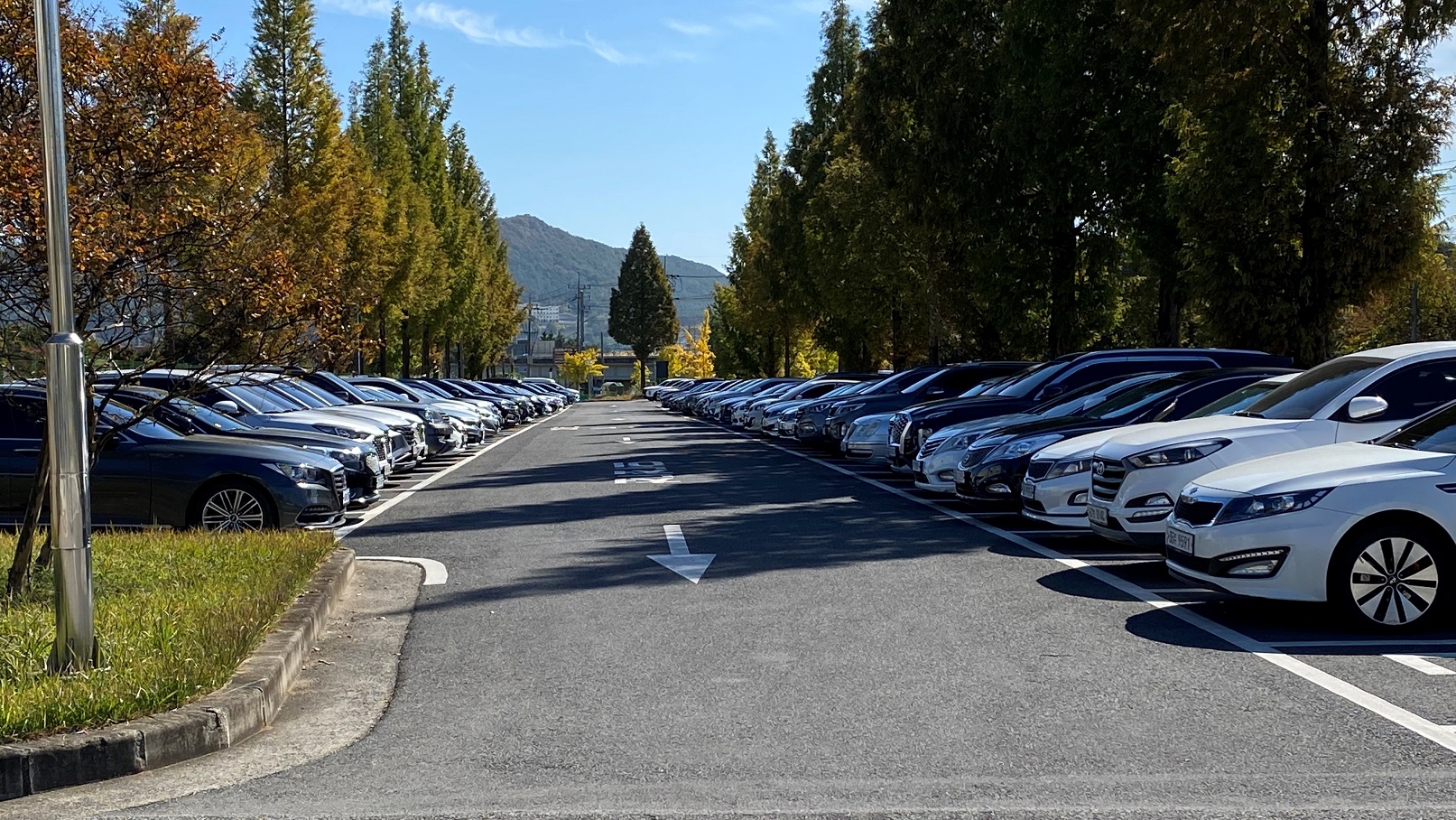
Korea's social harmony can be seen in a typical parking lot. is For example, many of the cars we saw on the roads were either white or black, and they were typically newer cars within 5-7 years of age and well maintained. We also noticed that Koreans prefer to back their car into their parking spots, creating orderly scenes and reducing parking lot collisions. It could be also that the parking lots are somewhat tighter fit and may not allow for a K-turn when backing up.
Korea is fit
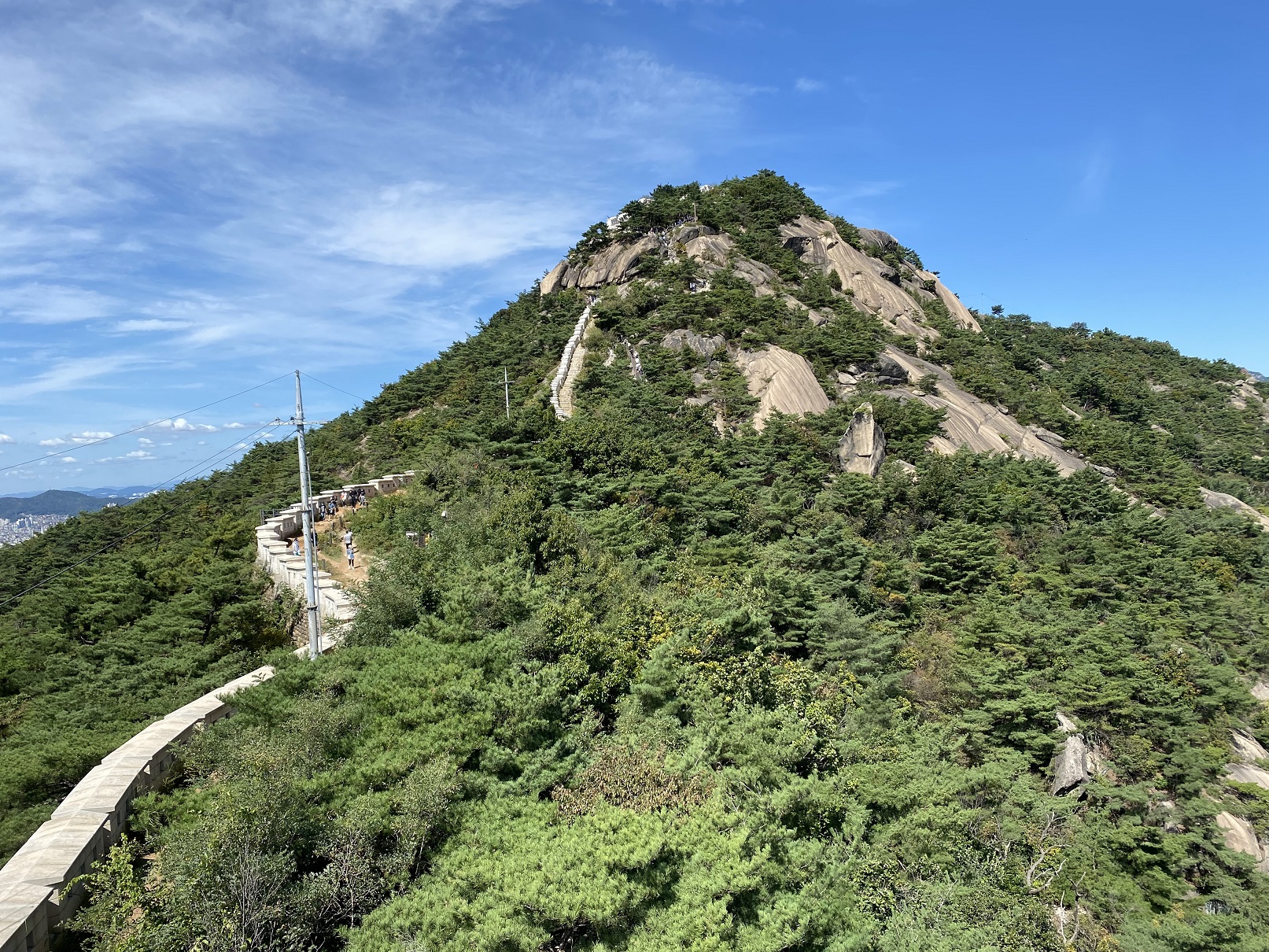
Another aspect of Korean life that we appreciated was that the Korean people are conscious of staying fit and physically active. Many of the people we met had some favorite way to get their body moving. The most common activities that we heard included going for long walk, hiking up a local mountain, riding the bike, or playing a sport like golf or tennis. We went on some great hikes around the Seoul area, such as Ingwansan. There are many mountains around the city of Seoul that offer great views looking down on the city. Ingwansan is special because it follows the path of the Seoul City Wall, made of huge blocks of stone. It offered protection from invading armies in the past. Some of the stones were marked with the names of workers who helped build the wall several hundred years ago. We appreciated that the local parks and recreation department provided well-marked trails on top of most of the mountains in the area. We were also quite humbled by the 70-80 year olds who were passing us on the hiking trail as we huffed and puffed our way up the mountain!
Korean love their seafood
As a peninsula that juts out into the middle of the Pacific Ocean, Korea suffers no shortage of great seafood plucked from its local waters. Walking around some of the streets in Busan felt like walking through a giant aquarium! Many of the restaurants featured the local catch outside on the sidewalk to entice passersby. We saw everything from shrimp to snails to cuttlefish on one walk through the city.
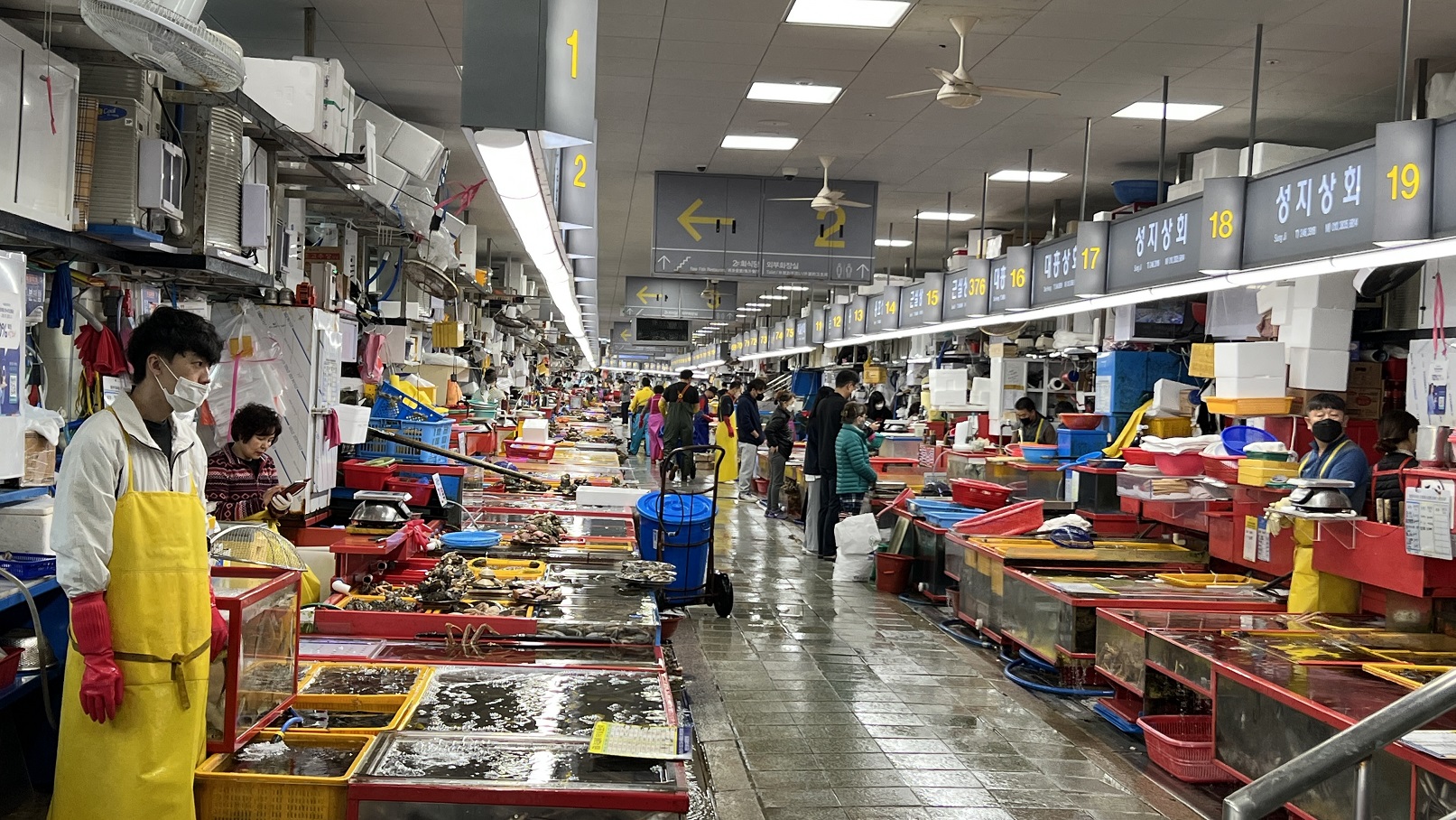
All cultures have delicacies that others may find weird. When it comes to seafood, Korean cuisine definitely tops the weirdness for us. We were invited to a seafood dinner, with a live octopus served in a hot pot. The culture of eating raw seafood is also practiced on other seafood including shrimp and fish.